Monday, March 26, 2012

The Messiah and the Covenants of Israel


The Messiah and the Davidic Covenant


The Davidic Covenant promised:


1.            An eternal house (this refers to the dynasty of David; the house of David or the line of David).

2.            An eternal throne (this refers to a permanent right to reign that was to be held by the house of David).

3.            An eternal kingdom (Israel’s future is secure - there will always be subjects to protect and serve).

4.            An eternal descendent (necessary if the house, throne and kingdom are to last forever).
 

That the Davidic Covenant climaxes in the person of the Messiah is supported by Scripture. Peter references it in his address at Pentecost. “Men and brethren, let me speak freely to you of the patriarch David, that he is both dead and buried, and his tomb is with us to this day. Therefore, being a prophet, and knowing that God had sworn with an oath to him that of the fruit of his body, according to the flesh, He would raise up the Christ to sit on his throne, he, foreseeing this, spoke concerning the resurrection of the Christ, that His soul was not left in Hades, nor did His flesh see corruption.” (Acts 2:29-31) Here is the eternal One, resurrected to sit eternally on the Davidic throne.

In this address Peter draws on Psalm 16 to demonstrate that the resurrection of Jesus was predicted, and since the Psalm was Davidic it must mean that this One who has been resurrected, the Messiah of Israel, must also be the One to inherit the throne of David and reign eternally. Peter builds his case quickly and well. Since he was speaking on the anniversary of the death of David, and because the tomb of David was known to his hearers, he confidently asserted that Israel’s greatest king was both dead and buried. The unexpressed implication is that since David’s tomb remains undisturbed, his body underwent decay, so he cannot have fulfilled the prophecy spoken of in Psalm 16. And if David cannot fulfill the psalm, someone else must. Peter offers the solution in verse 30. Knowing that God had promised to seat one of his descendants on his throne, David spoke prophetically of the resurrection of the Messiah. With this statement, Peter interpreted Psalm 16 in light of God’s promise to David. The resurrection, and (by implication) the death of the Messiah, was predicted in this Psalm (vv.8–11) and are part of the fulfillment of the promise to seat one of David’s descendants on his throne. While the promise statement in verse 30 of Acts 2 is an allusion from the Septuagint translation of Psalm 132:11, it surely draws generally from the Davidic theology that most Jews would have been familiar with.[1]

A later episode is described in Acts 15. There Luke undertakes to report on the debate in Jerusalem, where the question of the admittance of the Gentiles was under discussion. He quotes James quoting Amos. “After this I will return And will rebuild the tabernacle of David, which has fallen down; I will rebuild its ruins, And I will set it up; So that the rest of mankind may seek the Lord, Even all the Gentiles who are called by My name, Says the Lord who does all these things.” (Acts 15:14-17; cf. Amos9.11,12) The prophecy of the rebuilding of the tabernacle (or house) of David again draws on the promise to David that his house, throne and kingdom would be established forever.[2] It appears that the early Church leaders understood the rebuilding of David’s house in this way—as a reference to the re-establishment of the Davidic dynasty accomplished through the death, resurrection and exaltation of Jesus.


Not only ‘Son of David’ but also ‘King of the Jews’
 

It was crucial to the Messianic claim of Jesus that he should have been born in David’s town of Bethlehem, of David’s line and be a true Son of David, a title that was freely accorded Him by those who recognized His Messianic credentials.[3] But beyond this is His position as ‘King of the Jews’. He was not just of royal lineage, (many others could have claimed as much), but He was the only One who would be able to fulfill the royal prophecies. He was born “King of the Jews” (Matt.2.2); He was tried as “King of the Jews”, (Matt.27.11; John 18.33) a title he readily accepted before Pilate;[4] a title that Pilate readily accepted;[5] and He was convicted and executed as “King of the Jews” (Matt.27.37; Mark 15.26; Luke 23.38; John 19.19).

At the centre of the rejection of Jesus as Messiah was the reluctance of the Sanhedrin to acknowledge this aspect of the claim of Jesus. When He entered Jerusalem riding on a donkey, deliberately fulfilling the Zechariah prophecy, “Tell the daughter of Zion, ‘Behold, your King is coming to you, Lowly, and sitting on a donkey, A colt, the foal of a donkey,’” (Matt. 21:4-5) they complained of the crowd’s reaction when they praised the Son of David. This public display of power and popularity undoubtedly hardened their opposition and resistance. Their actions the following week where they sought opportunity to bring a political accusation against Him were partly a reaction to this event.


That Jesus had title to the Davidic throne is clear, but the time when His reign would begin is less clear. The disciples had thought it was imminent. After the resurrection and before the ascension they asked the risen Messiah, “Lord, will You at this time restore the kingdom to Israel?” (Acts 1:6) Jesus’ enigmatic reply was, “It is not for you to know times or seasons which the Father has put in His own authority.” (Acts 1:7)  It seems obvious that there will be no salvation for the nation of Israel until they acknowledge, not just the Messianic claim of Jesus, but also His Davidic claim. When He returns, He will return as King, and not just King of the Gentiles but especially King of the Jews. And He will reign from Jerusalem. Therefore it must await the time when the leaders will greet the Messiah in the same manner as the crowd did at His entry into Jerusalem on the first day of Passion week. They are required to express heartfelt delight at His appearing, fulfilling the main condition for His return; “you shall see Me no more till you say, ‘Blessed is He who comes in the name of the Lord!’” (Matt. 23:39)


[1] Cf. 2 Sam. 7:12–16; Ps. 89
[2] cf. 2 Sam. 7:16
[3] Matt.9.27; 12.23; 15.22; 20.30,31; 21.9; Mark 10.47,48; 18.38,39 (see also Matt.1.1; Luke 3.31)
[4] Matt.27.11
[5] Mark 15.9

Wednesday, March 7, 2012

The Messiah and the Covenants of Israel (Continued)

The Messiah and the Land Covenant (Continued)


The Return of the Jews to the Land
 

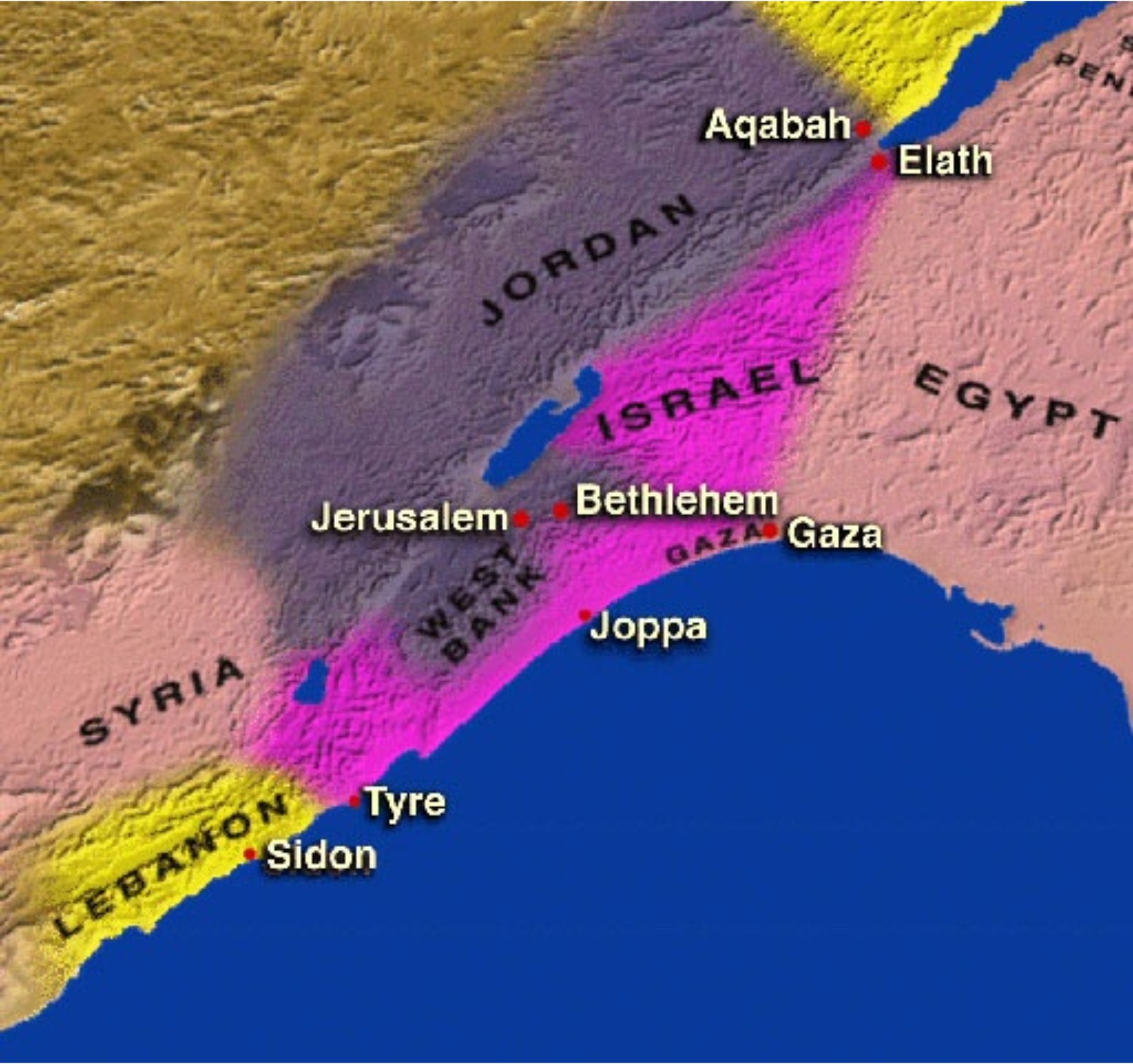
The obedience to the Law that was required was always predicated on faith. Mechanical obedience was never acceptable to the Lord. Not unsurprisingly, their historical obedience was never perfect and when the quality of that obedience dropped to unacceptable levels there would be a word from the throne via a prophetic spokesman to indicate an exile of the people. An examination of texts in the T’nach suggests there would be at least three dispossessions[1] and three restorations.[2] Of those, the three dispossessions have been fulfilled, so also the first and second restorations; the final restoration for which the nation waits is yet future.
 
Since the final return to the Land is conditioned on faith in God, then it will only take place when the nation accepts Jesus as their Messiah and are regenerated. It is true that there has been a return to the Land in the 20th century, but the numbers have been relatively small, and the bulk of the population have returned in unbelief, that is, they are still not followers of Jesus, the Messiah of Israel. Therefore, they do not qualify for the full restoration of the Land. This waits for the nation as a whole to repent, embrace God’s offer of mercy, and enjoy the benefits that the New Covenant can bring to them. Only then will they occupy the territory designated in the Abrahamic Covenant which at that time will be restored to full fruitfulness.
 
Here are one or two Scriptures relating to this:

1.                  The final regathering will be when Israel returns in faith. Moses spoke of it: But if they confess their iniquity and the iniquity of their fathers, with their unfaithfulness in which they were unfaithful to Me, and that they also have walked contrary to Me  … then I will remember My covenant with Jacob, and My covenant with Isaac and My covenant with Abraham I will remember; I will remember the land …when they are in the land of their enemies, I will not cast them away, nor shall I abhor them, to utterly destroy them and break My covenant with them; for I am the Lord their God. But for their sake I will remember the covenant of their ancestors, whom I brought out of the land of Egypt in the sight of the nations, that I might be their God: I am the Lord.” (Lev. 26:40-45)

2.                  It will be a total regathering. Isaiah described it: “Fear not, for I am with you; I will bring your descendants from the east, And gather you from the west; I will say to the north, ‘Give them up!’ And to the south, ‘Do not keep them back!’ Bring My sons from afar, And My daughters from the ends of the earth— Everyone who is called by My name, Whom I have created for My glory; I have formed him, yes, I have made him.” (Isa. 43:5-7)

3.                  The Land will be restored to its former glory. “‘I will bring back the captives of My people Israel; They shall build the waste cities and inhabit them; They shall plant vineyards and drink wine from them; They shall also make gardens and eat fruit from them. I will plant them in their land, And no longer shall they be pulled up From the land I have given them,’ Says the Lord your God.” (Amos 9:14-15)

4.                  God will be a shepherd to Israel. “‘Hear the word of the Lord, O nations, And declare it in the isles afar off, and say, ‘He who scattered Israel will gather him, And keep him as a shepherd does his flock.’” (Jer. 31:10)

Next Time: The Messiah and the Davidic Covenant


[1] cf.  Gen.15.13,14,16; Jer.25.11,12; Deut.28.63-68 with Deut. 30.1-3
[2] cf. Gen.15.14 with Josh.1.2-7; Dan.9.2 with Jer.25.11,12; Deut. 30.3; Jer. 23.5-8; Exek.37.21-25; Acts 15.14-17

Thursday, March 1, 2012

The Messiah and the Covenants of Israel (Continued)


The Messiah and the Land Covenant


The Land Covenant made the occupation of Israel conditional on the obedience of the people to the Mosaic Law. One of the purposes of the Mosaic Law was to prepare Israel to receive their Messiah. Jesus said, “if you believed Moses, you would believe Me; for he wrote about Me.” (John 5:46) The rejection of the Messianic claims of Jesus is a prima facie case against Israel that they were not keeping the Law. This is also the direct accusation of the Son of God, the only One who never told a lie. Did not Moses give you the law, yet none of you keeps the law?” (John 7:19) immediately adding, Why do you seek to kill Me?”  thus identifying the final act of His rejection, which, if the Word of God holds true would have to bring about an exile of the nation. And so it was. The Messiah who never shed tears over His own pain shed tears over the judgment that was to fall on Jerusalem. When He saw the city He wept over it, saying, If you had known, even you, especially in this your day, the things that make for your peace! But now they are hidden from your eyes. For days will come upon you when your enemies will build an embankment around you, surround you and close you in on every side, and level you, and your children within you, to the ground; and they will not leave in you one stone upon another, because you did not know the time of your visitation.” (Luke 19:41-44)

Jesus indicated that the exile would not really end until they reversed the national rejection of His Messianic office. “O Jerusalem, Jerusalem, the one who kills the prophets and stones those who are sent to her! How often I wanted to gather your children together, as a hen gathers her chicks under her wings, but you were not willing! See! Your house is left to you desolate; for I say to you, you shall see Me no more till you say, ‘Blessed is He who comes in the name of the Lord!’ ” (Matt. 23:37-39; Luke 13.34) The desolation of Israel will not end until they repent of national rejection of the Son of God, and call for His help and assistance. Israel cannot survive without God, and it is only the believing remnant that maintains the continuity of their existence.

On the way to His place of execution when His rejection would be finally confirmed by the most unjust and cruel act imaginable, He repeated His warning to the nation. In view of their statement, “His blood be on us and on our children.” (Matt. 27:25) Jesus said, “Daughters of Jerusalem, do not weep for Me, but weep for yourselves and for your children. For indeed the days are coming in which they will say, ‘Blessed are the barren, wombs that never bore, and breasts which never nursed!’ Then they will begin ‘to say to the mountains, “Fall on us!” and to the hills, “Cover us!”’ For if they do these things in the green wood, what will be done in the dry?” (Luke 23:28-31)

The leaders of the nation, supported by the majority of the population, had rejected their Messiah with the words, “Away with Him, away with Him! Crucify Him! … We have no king but Caesar!” (John 19:15) They will find out what kind of king Caesar is. Not insignificantly, Caesar also claimed the honor of being a deity.

The physical consequences of the rejection of Jesus and the fulfillment of His chilling prophecy to the women of Jerusalem did not mature until more than three decades later. Gessius Florus, the Roman governor/procurator of Israel from AD64 to 66 was not averse to utilizing his power for personal gain. Josephus blames him for ‘kindling the war’,[1] that is, it was Florus’ actions that brought about the Jewish revolt that ultimately led to the fall of Jerusalem and the destruction of the Temple. Several Roman commanders were involved. The campaign was begun by the governor of Syria, Cestius Gallus, who with the 12th legion, plus two thousand men from other legions and reinforced with cavalry and auxiliary troops began the campaign to subdue a revolt by the disenchanted Jewish people. His campaign began successfully enough but he failed to take the Temple Mount and withdrew. Gallus was succeeded by Vespasian and Vespasian’s son, Titus, and it would be Titus who would finally conquer Jerusalem, over-run the opposition on the Temple Mount and destroy the Temple. The Titus arch, erected in Rome to memorialize his victory, depicts the seven branch Menorah being carried away by Roman legionaries.

Although the Jews were seriously depleted and some exiled at the time of the Vespasian war, it would be the rebellion under the Messianic claimant Bar Cochba that would bring about the wholesale deportation of the population. In AD 132 Simon Bar Cochba persuaded many leading Jews that he was the Messiah and would be able to lead a resistance against Rome that would be the fulfillment of the word of the prophets and free them from the Gentile yoke. Initially there was some success, but Rome always had reinforcements and the ability to put down rebellions, and the revolt was finally subdued in AD 135. However, the cost to Rome was heavy, both in the loss of men and resources. The province itself was reduced to a wilderness. Schurer reports “All Judea was well-nigh a desert. 50 fortresses, 985 villages were destroyed, 580,000 Jews (?) fell in battle, while the number of those who succumbed to their wounds and to famine was never reckoned. Innumerable was the multitude of those who were sold away as slaves. At the annual market at the Terebinth of Hebron they were offered for sale in such numbers that a Jewish slave was of no more value than a horse. What could not be disposed of there was brought to Gaza and there sold or sent to Egypt, on the way to which many died of hunger or by shipwreck”.[2] Jerusalem was converted into a Roman colony with the name Aelia Capitolina. The character of the city was transformed from Jewish to heathen by driving out any remaining Jewish occupants, and replacing them with colonists. No Jew was allowed to re-enter the city. Any discovered within its boundaries was put to death. A Temple to Jupiter was erected to replace the Jewish Temple on the Temple mount. That which Antiochus Epiphanes had tried to accomplish some centuries earlier was now accomplished by the Roman conquerors. Thus the Jews finally and completely lost the Temple, the City and the Land. It would be some 1800 years before they would have a partial foothold in Israel once again.

More Next Time:

[1] The works of Josephus, Wars 2, 556
[2]Schürer, E. (1890). A history of the Jewish people in the time of Jesus Christ, first division, Vol. II. (2:314). Edinburgh: T&T Clark.

Wednesday, February 22, 2012

The Messiah and the Covenants of Israel (Continued)


A Proper Appreciation of the Law would lead to an appreciation of the Messiah


So, in the letter to the Galatians he spelt out the purpose of the Law. It was a schoolmaster to lead the Jewish people to their Messiah.If the Jewish people had accepted their Messiah, they would have had a graduation ceremony. Then, no longer under the tutorship of the Law, they could have enjoyed all the privileges and responsibilities of sons of God, as Paul indicated: But when the fullness of the time had come, God sent forth His Son, born of a woman, born under the law, to redeem those who were under the law, that we might receive the adoption as sons”. (Gal. 4:4,5) They would have entered into that condition of grace that the Church now enjoys, for we “are not under law but under grace”. (Rom. 6:14) Alas, the leadership of the nation failed their finals. The Law had given the Sanhedrists power over the people and they did not want to relinquish it. Moreover they considered themselves patriotic Jews by defending not only the Mosaic Law but also the extrapolated laws of the teachers, now preserved for us in the Mishnah. They even accused the Messiah of breaking the law, He who had come to fulfill the Law and redeem them from the Law. But God is very gracious. Although nationally, because of the failure of their ruling body, the Jews did not pass their exams, the grace of God made it possible for individuals to graduate. Peter exhorted all who heard him to separate themselves from the national decision taken by the Sanhedrin. Then they could be saved. Saul, the Pharisee, (in some ways a special case) graduated in the school of the Messiah. Moreover, he gave private tutorials and led others to faith in Yeshua HaMashiac (Jesus the Messiah). Believers said of him, he is preaching the “faith which he once tried to destroy.” (Gal. 1:23) So Rabbi Saul, champion of Law and works, as he testified: And I advanced in Judaism beyond many of my contemporaries in my own nation, being more exceedingly zealous for the traditions of my fathers”, (Gal. 1:14) became the Apostle Paul, champion of grace and faith: “For by grace you have been saved through faith, and that not of yourselves; it is the gift of God”. (Eph 2:8)

Furthermore, in his letter to the Galatians he urged the readers to “Stand fast therefore in the liberty by which Christ has made us free, and do not be entangled again with a yoke of bondage”. (Gal. 5:1) To paraphrase his argument - now that you have been saved by grace, do not think that you remain a child of God by works. That path makes the cross of Christ of no effect. By the time we come to his letter to the Colossians, his theology of the crucified Messiah is more mature.  There he declared that the Messiah dealt a fatal blow to the Law: “Blotting out the handwriting of ordinances that was against us, which was contrary to us, and took it out of the way” (Col.2.14). So, for those who have put their faith in a crucified Messiah, the curse of the Law is negated by the action of the cross.

Anne Ross Cousin wrote

Death and the curse were in our cup,

O Christ, ‘twas full for Thee!

But Thou hast drained the last dark drop,

‘Tis empty now for me.

The bitter cup, love drank it up;

Now blessings’ draught for me.

To Summarise

The Law was given:

         to provide an ethical, moral and social structure to Israel as a nation.

                  to emphasize the righteousness of God and the sinfulness of man.

to demonstrate the grace and mercy of God (through the sacrificial system);

to lead them to recognize the grace and mercy of God when the Son of God came as their Redeemer and sin bearer.
 
However, the Law is now no longer the pattern for righteous living. For that we need to look to the Messiah, who not only fulfilled the Law but also died to remove the curse of the Law.


Tuesday, February 14, 2012

The Messiah and the Covenants of Israel (Continued)


By the Law comes the Curse


So the Law was brought in so that the curse could be pronounced on the Law breaker. In God’s grace, under Law, He provided the sacrifices and priesthood to deal with any infractions committed. Nevertheless, “For as many as are of the works of the law are under the curse; for it is written, ‘Cursed  is everyone who does not continue in all things which are written in the book of the law, to do them.’” (Gal. 3:10) The curse of the Law is more clearly defined in Deuteronomy 28, but see also Leviticus 26. “But it shall come to pass, if you do not obey the voice of the Lord your God, to observe carefully all His commandments and His statutes which I command you today, that all these curses will come upon you and overtake you”.

 “Cursed shall you be in the city, and cursed shall you be in the country.

“Cursed shall be your basket and your kneading bowl.

“Cursed shall be the fruit of your body and the produce of your land, the increase of your cattle and the offspring of your flocks.

“Cursed shall you be when you come in, and cursed shall you be when you go out”. (Deut. 28:15-19)
 
From the application of these passages arose the practice of giving up habitual offenders to a ‘cherem’ or curse. The Jews expressed it as giving them up to Satan. These obdurate law-breakers would lose the protection that God provided for His people. They would, like Job, be exposed to the activity of Satan, and could suffer a similar fate to Job. An offender who resisted correction and exhausted all remedy contained in the Law would become ‘a curse among his people’.  Jesus was brought face to face with some such individuals: a paralytic:[1] a woman who washed His feet with her tears. (she is described as a sinner).[2] To both of these Jesus said, “your sins are forgiven you”. The paralytic was also healed. A similar case to the paralytic was the disabled woman who was bent over, and could not stand up straight. The cause of this infirmity was identified by the Messiah: “… ought not this woman, being a daughter of Abraham, whom Satan has bound for eighteen years, be loosed from this bond on the Sabbath?” (Luke 13.16) In forgiving their sins, healing their bodies and delivering them from Satan, Jesus was clearly anticipating the full benefit of His sacrificial death. This multi-layered act of redemption can only be explained by the fact that, among other things, they were delivered from the curse of the law.
 
But what happened at Calvary to make this sophisticated act of redemption possible? How were they, and indeed us, delivered from the curse of the Law? The answer is - by the act of substitution. Christ was pronounced ‘cherem’ instead of us. Paul writes, “Christ has redeemed us from the curse of the law, having become a curse for us (for it is written, “Cursed is everyone who hangs on a tree”), (Gal. 3:13)


The Crucified Christ deals with the curse of the Law


Here then, is one reason, why the death of the Messiah had to be by crucifixion. A ‘cursed’ Messiah, might be despised by the Jewish people, but nevertheless was absolutely necessary for them. The Jewish people were under the ‘curse of the Law’ because they could not keep it. R. Levi said if they could only keep the Sabbath fully for one day, then Messiah would come.[3] But they could not perfectly keep the Law, even for only one day. The wider application of the curse also applies.  The argument is, that if the Jews could not keep it, and they had every advantage, there is no way the Gentiles could have escaped the curse. “Now we know that whatever the law says, it says to those who are under the law, that every mouth may be stopped, and all the world may become guilty before God.” (Rom. 3:19) Paul was very clear. He said that returning to the Mosaic covenant only led to bondage, the curse and death. “For as many as are of the works of the law are under the curse; for it is written, “Cursed is everyone who does not continue in all things which are written in the book of the law, to do them.”  (Gal. 3:10 cf. Deut.27.26) No-one is justified by the Law,[4] for ‘there is none righteous, no not one’. (Rom.3.10)

More Next Time


[1] Recorded in Matt.9; Mark 2; and Luke 5
[2] John 7.37 ff
[3] Midrash Rabbah on Ps.95.7
[4] Gal.2.16

Tuesday, January 31, 2012

The Messiah and the Covenants of Israel (Continued)

The inferiority of Law compared to Promise


We must also note that Paul added two further elements in explanation of the purpose of the Law, i.e. it was appointed through angels by the hand of a mediator”. (Gal. 3:19) This additional clause is designed to show the inherent inferiority of the law in terms of the way it was given and administered, that is, through angels and a mediator. Paul’s meaning is clear: the law is not on the same par with the covenant of promise (that is the Abrahamic covenant) not only because it was chronologically limited but also because it was handed down by angels with a man acting as a go-between. The Hebrew text of Exodus chapter nineteen, which contains the scriptural account of the giving of the Law, does not refer to angels, but it does describe Mount Sinai as surrounded by thunder, lightening, a thick cloud, and billows of fire. (Exod. 19:16–19) Later Old Testament texts, notably the Septuagintal version of Deut 33:2 and Psalm 68:18 interpret these natural phenomena to mean that a large number of angels, the fiery hosts of heaven, accompanied God in his giving of the law at Sinai. The participation of the angels in the giving of the law was not merely a piece of pious Jewish folklore, for it is confirmed elsewhere in the New Testament[1]. Paul accepted it and repeated it not for the purpose of enhancing the law by associating it with the glory of angels but rather to indicate how superior ‘promise’ is to ‘Law’ since the latter required a creaturely mediation.


    The Law was not only mediated by angels but also Moses. The people themselves asked for a mediator. They said to Moses, you go to the Lord and relay to us what He says - we dare not come close. And in Pauline theology, Moses the mediator stands in contrast to Christ. As Paul explains more fully in 2 Cor. 3:7–18, the ministry or covenant negotiated by Moses was characterized by death and condemnation and it is “fading away”; on the other hand, the new covenant that Christ has ushered in is marked by life, justification, and a radiance of “ever increasing glory, which comes from the Lord, who is the Spirit.”


Paul did not intend to denigrate Moses as a person but rather to show again the transitory and totally inadequate character of the Law as a system of salvation. The Epistle to the Hebrews picks up on one of Paul’s favorite themes, that of servant and son, and applies them to Moses and Christ in precisely this way: “Moses was faithful as a servant in all God’s house … but Christ is faithful as a son over God’s house” (Heb 3:5–6;). But there is more: Paul gives another purpose to the giving of the Law. It is tied up with the phrase, “it was added because of transgressions”. In other words it was to bring the realization that sin was exceedingly sinful. Those that break God’s law will suffer the curse. It was the case with Adam. He sinned and suffered the curse. But where there is no law there is no imputation of sin.[2]

More Next Time
[1] cf. Acts 7:38, 53; Heb 2:2
[2] Rom. 5.13

Monday, January 23, 2012

The Messiah and the Covenants of Israel (Continued)

The Purpose of the Law

The Mosaic code with its commandments and judgments was designed, among other things, to be a finger-post to point the nation of Israel to their Messiah. Since Israel was to be a theocracy, incorporated into the code were the regulations regarding worship. There were instructions for the erection of a Sanctuary, the ordination of a priesthood, a description of the offerings they were to bring, and a diary of festivals that were to be celebrated when Israel was to come before the Lord and acknowledge His mercy and His grace. Besides the immediate purpose of regulating the worship of the individual Israelite and the nation as a whole, these also had another purpose. They too were to prepare them for their Messiah.

The Time Limit on the Law of Moses


If the Law was added until the seed came as Paul said, then this means that the Law had a limited duration. Just as it had a point of origin on Mount Sinai, so also it had a point of termination—Mount Calvary. ‘Seed’ is used as a name for Christ, echoing Paul’s earlier identification.  “Now to Abraham and his Seed were the promises made. He does not say, “And to seeds,” as of many, but as of one, “And to your Seed,” who is Christ”. (Gal. 3:16) So the age of the Law is over. This truth is a part of Paul’s theology. The texts, “you are not under law”, (Rom. 6:14) and “you … have become dead to the law through the body of Christ”. (Rom. 7:4) encapsulate his teaching on the subject. School is out – Messiah has come – childish things are to be put away. What this means is: “Christ is the end of the law for righteousness to everyone who believes”. (Rom. 10:4) There was nothing wrong with the Law. The law was “holy, and the commandment holy and just and good”. (Rom. 7:12) But salvation could not come by the Law, because no-one could keep it.


Again, I repeat, the age of Law is over. So Paul interpreted the law eschatologically in terms of (i) its fulfillment and (ii) its cancellation, in the Messianic mission of Jesus. The Messiah “wiped out the handwriting of requirements that was against us, which was contrary to us”. He took “it out of the way, having nailed it to the cross”. (Col 2:14)


This section of Galatians is brim full of this idea that Christ’s work on the cross brought an end to the Mosaic Law. Words like ‘until’; ‘before’; ‘no longer’; ‘formerly’; ‘but now’. Things changed with the coming of the Messiah and His death by crucifixion. To repeat, “Christ is the end of the law for righteousness to everyone who believes”. (Rom. 10:4)


While the Abrahamic covenant is eternal, the Mosaic covenant was for a particular purpose and ceased when that purpose matured.

More Next Time: